
Beyond Weight Loss: 8 Long-Term Benefits of Bariatric Surgery
Committing to better health through bariatric surgery is a big step and a brave move forward, However, that courage can sometimes waver because, well, it's surgery. It's natural to worry about the unknown and wise to weigh your options when it comes to making such a life-altering change.
Though no surgery is entirely risk-free, the safety profile of laparoscopic bariatric surgery is comparable to some of the safest and most commonly performed surgeries in the U.S., including gallbladder surgery, appendectomy and knee replacement. Bariatric surgery has proven to be the most effective and durable treatment for severe obesity, helping patients who have been unable to lose weight through diet and exercise alone.
Surgery, combined with exercise, healthy eating, and social support, allows patients to lose a significant amount of weight and maintain that loss. But, there are many other benefits beyond weight loss.
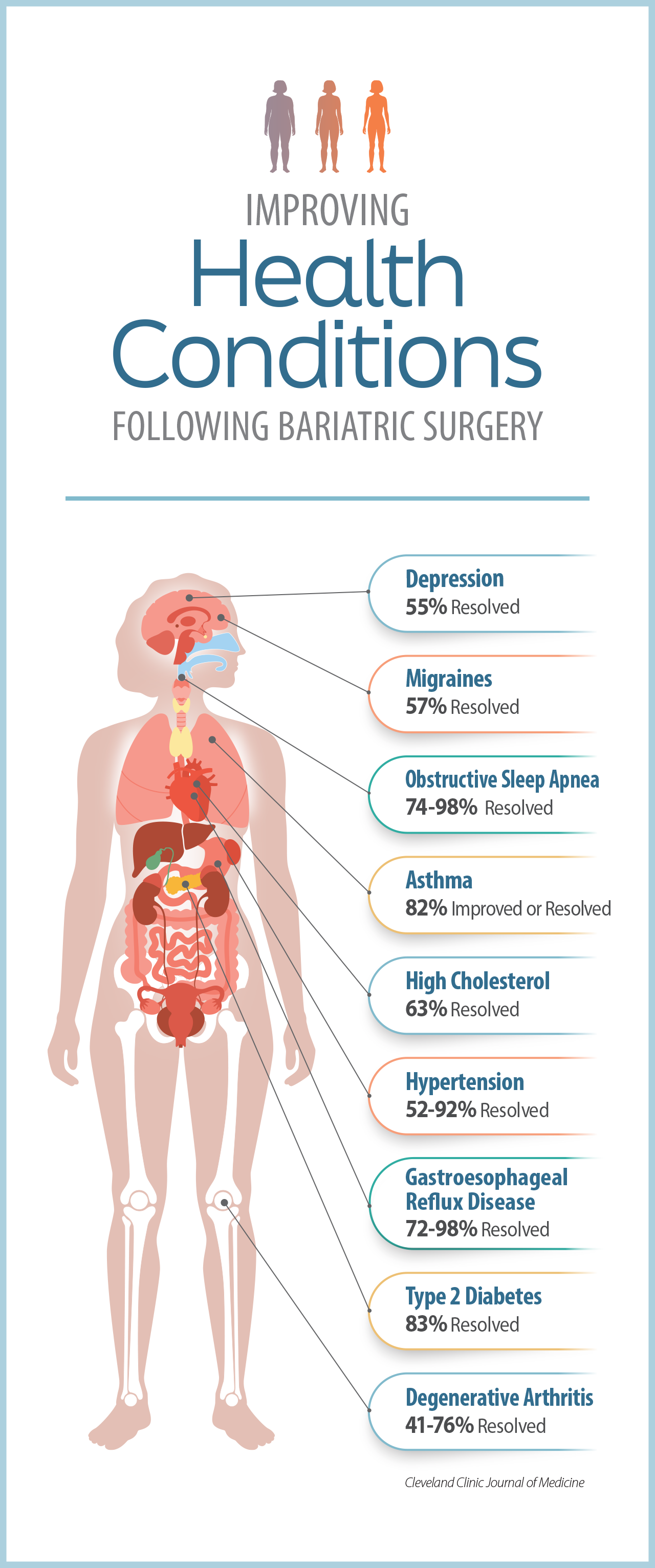
Alleviating high cholesterol. Fatty deposits in your blood vessels caused by high cholesterol hinder blood flow and can lead to cardiovascular disease, high blood pressure, diabetes, heart attack or stroke. But losing as little as 10 pounds can improve your cholesterol levels.
Reducing depression. Obesity affects your mood, but depression also can lead to less exercise, cravings for high-carb food and a slower metabolism. It's a vicious cycle, but weight-loss surgery has been known to decrease depression symptoms by as much as 55%.
Ending sleep apnea. Untreated, sleep apnea contributes to hypertension, stroke, heart failure, diabetes, obesity and heart attacks. However, up to 98% of bariatric patients experience a reversal of sleep apnea.
Heading-off hypertension. High blood pressure damages arteries and decreases blood flow and oxygen to the heart. In addition, it can lead to heart attack, stroke, heart failure, metabolic syndrome, aneurysm and dementia. Weight-loss surgery, however, has been known to reverse the condition in as many as 63% of people, according to the American Heart Association.
Improving fertility. Studies indicate that in the first year post surgery, men experience an increase in testosterone, sperm viability and sperm volume. Women experienced a reversal of polycystic ovary syndrome symptoms (PCOS), and the average pregnancy rate for previously infertile PCOS patients post bariatric surgery was 73%.
Living longer. Studies, including a 2020 report in JAMA, found weight loss surgery patients outlived people of similar age, sex, and (intial) BMI who had not undergone surgery. It can reduce all-cause mortality by up to 40% compared to patients who chose not to undergo a weight-loss procedure.
Reversing type 2 diabetes. Type 2 diabetes and obesity exponentially increase your risk of depression, blindness, skin conditions, sleep apnea, hearing loss and other diseases. However, up to 83% of weight-loss surgery patients experience a reversal in the disease.
Saying "farewell" to arthritis. Losing weight means less pressure on your joints and decreased pain, stiffness and swelling. Up to 76% of patients report improvement in arthritis symptoms and mobility -- which can mean reduced need for medication.
Any surgery comes with some risks and new lifestyle requirements, but wouldn't it be worth it to lose weight, potentially reverse related medical conditions and decrease health risks? What if you could ditch your medications? What if you could get back to the lifestyle you love - the one with pain-free exercise, more quality time with family and friends and more comfortable travel?
Are you ready to take the next step? Talk to your doctor today about the long-term rewards you've been envisioning.
Call Us to Discuss Next Steps:1-865-392-3971 Register for a Free Seminar